2.1 Attitude — content, structure, function
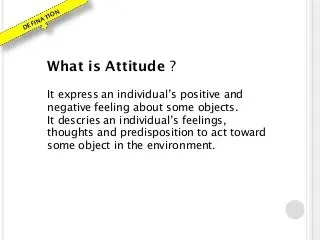
Attitude : evaluate particular object (people, things, events, issues) w/ favour or disfavour
Content - CABEI
Components of Attitude : - Cognitive component - judgement on basis of available info, beliefs, thoughts and attributes - Affective C - feelings and emotions, - Behavioural - tendency to act in certain manner
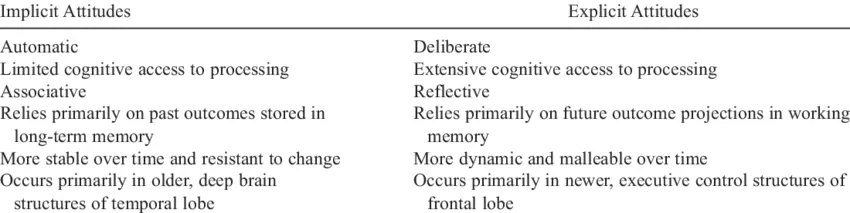
Types of Attitude - Explicit attitude - result of conscious cognition/ aware of his - Implicit - derived from past memories, unknowingly
How Attitudes are formed : - Classical Conditioning -> dog-bell experiment of Pavlov - Instrumental Conditioning - behaviours followed by positive outcome makes them repeat it. - Genetic Factors - ex preference for food - Observational learning - observe rewards/ punishments
![[attitudes-how-they-form-change-shape-behavior-2795897-final-01-fe167926b1a641ec9d4187eed53c4df3.png |500]]
Structure :
- Attitude Strength - strongly related to self, certainty, intensity extremity, origin, personal importance
- Attitude Accessibility - from memory
- A Ambivalence - conflicted towards A, both positive and negative towards object Functions of A (UKEdVeS)-
- Utilitarian/instrumental function - positive A towards objects w/ +ve rewards
- Knowledge Fn - to get an organised view of world, society
- Ego defensive Fn - help cope w/ emotional conflicts
- Value Expression - demonstrate one's self image
- First 4 functions were defined by Daniel Katz
- Social identity Fn - what they convey about people